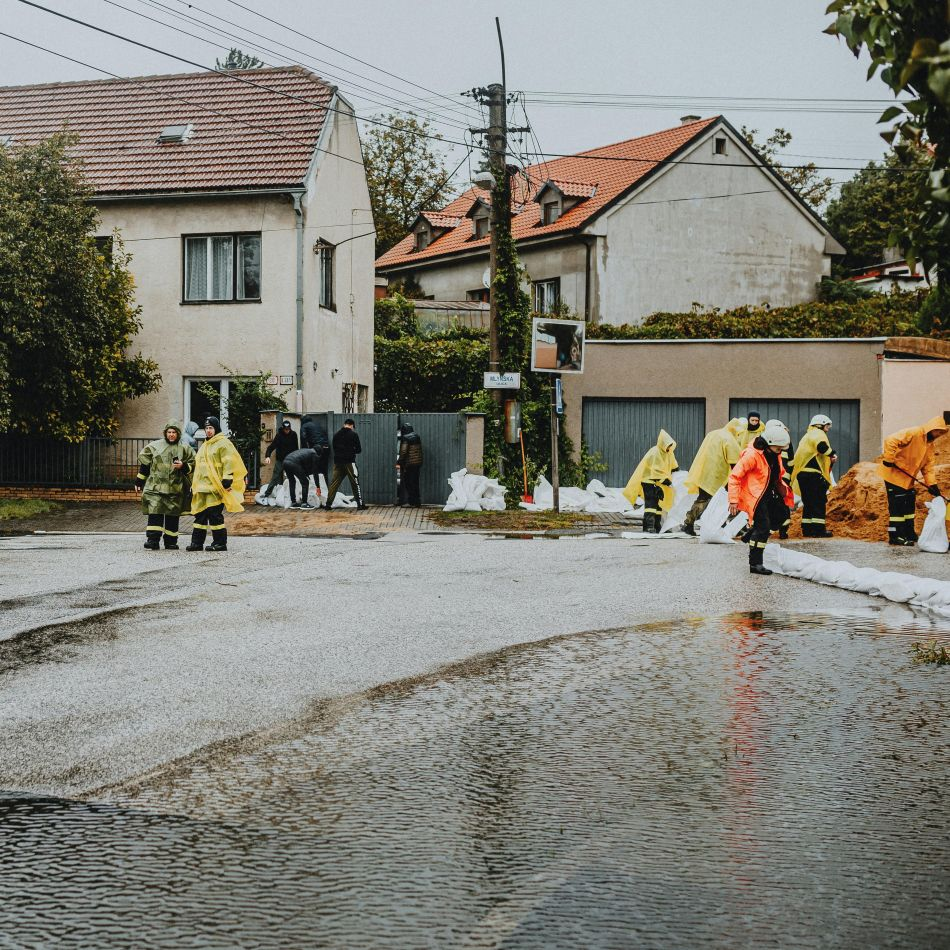
Whether it’s reports of wildfires on the West Coast, hurricanes on the East, or a major storm in your own backyard, the news is often filled with stories of disaster. In those moments, do you feel a pit growing in your stomach? It’s a feeling of helplessness, of being a spectator to chaos. I know I did. For years, my disaster plan was basically to “hope for the best.” But hope isn’t a strategy, and I got tired of feeling unprepared for the inevitable “what if.” I knew I didn’t have any emergency supplies in my home and that made me feel uneasy.
Why should you train and stock up on emergency supplies?
I wanted to move from being a passive worrier to an active preparer. I wanted to know that if the worst happened, I could be a genuine help to my family and my neighbors, not just another person needing rescue. That desire led me down a rabbit hole of community preparedness, and I kept stumbling upon the same acronym: C.E.R.T. I pictured intense, time-consuming training that I just couldn’t fit into my life. But then I discovered the first step was a completely free, self-paced online course offered by FEMA in conjunction with local groups. No commitment, no cost, just an opportunity to learn. I decided to jump in, and I can honestly say it’s one of the most empowering things I’ve ever done.

If you’ve been wanting to feel more capable and less anxious, let me walk you through what it’s all about.
Learn more about CERT HERE at the FEMA website.
So, What Exactly is CERT?
CERT stands for Community Emergency Response Team. The program was actually born in the 1980s out of the Los Angeles Fire Department’s recognition that after a major earthquake, their professional responders would be completely overwhelmed. They needed a force of trained civilians to act as a bridge between the disaster event and the arrival of professional help. The idea was so effective that FEMA adopted it and turned it into a national program.
The core philosophy is simple but profound: train everyday people with basic, practical disaster response skills. In the first 72 hours after a major event emergency services are stretched to their absolute limit. CERT members are trained to safely take care of themselves, their families, and their immediate community during this critical period.
This isn’t about being a superhero. It’s about performing simple, vital tasks: checking on at risk neighbors, using a fire extinguisher to put out a small fire before it becomes a big one, providing basic first aid for minor injuries, or organizing your neighbors to do a systematic search of your block. It’s about becoming an asset to your community, guided by the principle of doing the “greatest good for the greatest number.”

Essential Emergency Supplies: Bare Minimum
Being able to take care of your family starts with the basic emergency supplies you should be keeping in your home. Food, Water and First Aid. A 72 hour kit is typically the starting point for most individuals or families. To keep our disaster readiness sharp and ensure our emergency supplies are current and functional, our family holds a dedicated Emergency Preparedness Day every six months. It’s a simulated 24-hour disaster scenario where we simulate the power, gas, and water being non functional to practice living off our stored resources. We cook our meals on our camp stove, drink from our storage and use the gear we would use in a real emergency. The goal is to “survive” as if a real crisis had struck. Any challenge we face becomes a “lessons learned” note that we use to refine our disaster plan, restock or upgrade our emergency kits.
72 Hour Emergency Food Supplies
We recommend the ReadyWise Emergency Food Supply – 72 Hour Survival Kit, 30 Servings. This kit is for 1 person and is $22.99 at the time of this posting. This is an excellent way to start your emergency supply kit. On average each serving requires 1 cup of water, in addition to the water you need to drink. As far as emergency food goes, the Readywise kits are probably the best tasting that we’ve tried.
Emergency Water Supplies
One of the most challenging aspects of disaster preparedness is reliably storing and maintaining a potable water supply. While large containers are cost-effective, they require frequent rotation, risk contamination, and can be difficult to transport quickly. This is where solutions like the Emergency Water Packet 4.227 oz – 3 Day/72 Hour Supply come in, offering a simple and maintenance-free alternative. These individual, hermetically sealed pouches eliminate the need for checking expiration dates on bulky jugs, feature an extended five-year shelf life, and are compact enough to be easily distributed across multiple emergency kits, ensuring that every member of the family has immediate access to safe drinking water when every drop counts.
72 Hour First Aid Kit
For a 72 hour first aid kit we’d recommend picking up this OSHA certified kit. This isn’t to be confused with a trauma kit, that is completely separate. But this is a basic kit for minor injuries and ailments like cuts, burns, bites, and headaches. In the immediate aftermath of a major disaster, emergency responders may be overwhelmed or unable to reach you, leaving you and your family to fend for yourselves. This specialized kit contains medical emergency supplies, like bandages, antiseptic, and pain relievers. This allows you to provide immediate care and prevent small issues from becoming serious complications until professional help or medical facilities become accessible.
Diving Into the Online Training: A Unit-by-Unit Breakdown
I was honestly expecting a dry, text-heavy government course that would put me to sleep. I couldn’t have been more wrong. The online course is a mix of reading, engaging videos, and interactive checks that keep you focused. The best part is its self-paced nature; I chipped away at it for about 30-45 minutes each evening. Here’s a closer look at the gold nuggets of knowledge you’ll gain from each unit:
Unit 1: Disaster Preparedness
This goes way beyond just “have a can of beans and a flashlight.” You learn to think strategically. It covers building different types of kits of emergency supplies, not just a “bug-out bag” but also a “shelter-in-place” kit for your home and a kit for your car. It forces you to think through critical questions: How will my family communicate if cell towers are down? Check out our Mestastic Article Here. What are the specific risks in my area and how do I prepare for them or mitigate them? This unit alone will change the way you see your home and your daily routines.
Unit 2: Fire Safety and Utility Controls
This was an eye-opener. You learn about the fire tetrahedron (fuel, heat, oxygen, chemical chain reaction) and how removing any one element can extinguish a fire. Most importantly, you learn the P.A.S.S. method for using a fire extinguisher: Pull the pin, Aim at the base of the fire, Squeeze the handle, and Sweep from side to side. Now, when I see an extinguisher on a wall, I don’t just see a red can; I see a tool I know how to use. You also learn the critical steps for safely shutting off your home’s natural gas, water, and electricity, a skill that can prevent a bad situation from becoming catastrophic.

Units 3 & 4: Disaster Medical Operations
This is the heart of the course for many people. It’s broken into two parts and is incredibly empowering. You learn to approach a scene and quickly perform triage using the S.T.A.R.T. system (Simple Triage And Rapid Treatment). This means rapidly assessing victims and tagging them with colors (green for minor, yellow for delayed, red for immediate, and black for deceased) to help professional responders know who to treat first. You also learn to treat the three main killers in a disaster: airway obstruction, bleeding, and shock. They teach you simple, life-saving interventions like the head-tilt/chin-lift maneuver, how to apply direct pressure and tourniquets (the right way!), and how to keep victims warm to treat for shock. It’s not about becoming a paramedic; it’s about knowing how to stop a bleed and save a life with what you have. Related Article: Stop the Bleed Training

Unit 5: Light Search and Rescue Operations
The number one rule here is rescuer safety. You are taught never to enter a heavily damaged structure and to always work with a buddy. This unit covers how to conduct a systematic “size-up” of a building to assess its safety, how to search rooms effectively, and simple techniques for lifting heavy objects and removing victims. It’s a lesson in methodical, safe, and effective search and rescue.

Unit 6: CERT Organization
When a group of people comes together to help, chaos can quickly take over. This unit teaches you how CERT teams are organized using the Incident Command System (ICS), the same structure used by police, fire, and FEMA. It ensures everyone has a role, communication is clear, and resources are deployed effectively. It’s the framework that turns a group of concerned neighbors into an effective team.
The course culminates in a final exam. Once you pass, you get a certificate of completion, your golden ticket to the next, and most exciting, step.
Bringing Knowledge to Life with Hands-On Training
That certificate from the online course is your prerequisite for the in-person skills training hosted by your local CERT program. This is where the theory becomes reality. Over a series of classes or a weekend, you’ll join other members of your community to practice everything you learned.
You’ll get the feel of pulling the pin on a real fire extinguisher and putting out a controlled fire. You get to practice bandaging and splinting on your classmates. You’ll learn how to safely carry a victim and use cribbing to lift a heavy object off a mannequin. It all culminates in a full-scale disaster simulation, a mock earthquake or plane crash, where you’ll be divided into teams and have to perform triage, search and rescue, and first aid in a chaotic but safe environment. It’s challenging, it’s fun, and it solidifies the knowledge in a way no computer screen ever could.
Completing both parts is what gets you your full CERT certification and your official gear. But more than that, it gives you the quiet confidence that when things go wrong, you are ready.
Don’t wait for the next disaster headline to make you feel helpless. Take the first, easiest step. The knowledge is free, the time commitment is flexible, and the feeling of empowerment is priceless. Gathering essential emergency supplies will help you put this training into practice.
Find your local CERT program online and get started today!
Related Article – EDC Gifts for 2025